


Q&A with JORO
JORO is a brand built on a deep understanding of textiles and strong ties to India. Today, the company is led by three siblings whose father founded a fabric mill in Mumbai in the 1980s. The business quickly grew to become one of the world's leading suppliers of premium-quality home textiles.
Guided by the philosophy, 'Rooted in Tradition, Modern in Design', JORO continues to honour its heritage, with family values and craftsmanship at the heart of everything it does.
We spoke with Founder and CEO, Sahib Singh, to learn more about the brand's journey, its ethos, and how it has remained true to its family roots almost four decades later.
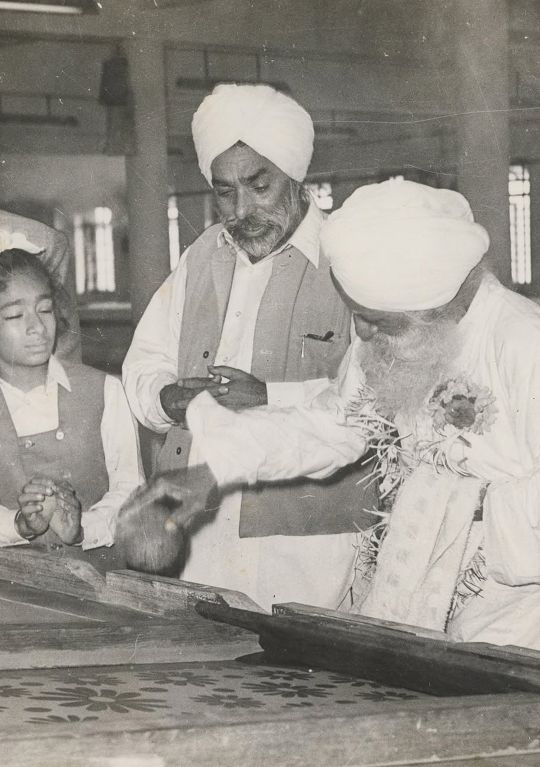
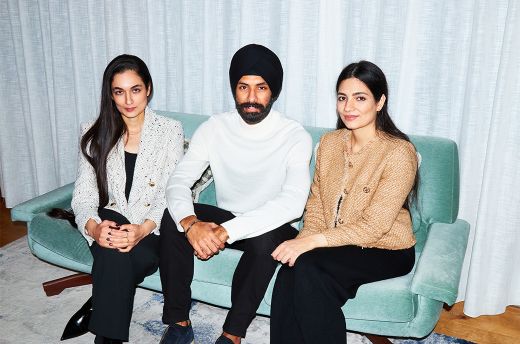
A snapshot from where JORO began, to where it is today, led by siblings Nimrat Kaur, Sahib Singh and Simrat Kaur
How would you describe the JORO aesthetic to someone new to the brand?
Rooted. Tactile. Considered. Modern.
Everything we make carries a sense of where it came from: the unique fabric construction, the landscape that inspired it, the family conversation that shaped it. We want people to feel that the moment they touch something.
JORO is a family-run business with deep roots in India. Can you tell us more about how the brand began?
We grew up with textiles in our blood. Our father founded a fabric mill in Mumbai in 1983, which grew into one of the largest suppliers of premium home fabrics in the world. Our mother, who has worked as director of the family business for as long as we can remember, made sure we understood not just the business of fabric but the soul of it: the importance of time-honoured techniques, of quality you can feel, of craftsmanship that never cuts corners.
As siblings, the three of us, Nimrat, Simrat, and Sahib, spent our lives immersed in that world. JORO was born out of a desire to bring it home, quite literally. We wanted to create a brand that channelled everything our family had built over four decades into something people could bring into their own spaces: beautiful, considered soft furnishings that carry real meaning.
What has been the most rewarding part of building a family-run brand?
Honestly, it is seeing our parents' life's work find a new expression. Our father spent decades perfecting the craft of fabric-making, and our mother dedicated herself to upholding the standards that made the business what it is. JORO feels like the next chapter of that story, and being the ones to carry it forward is something we don't take lightly.
Beyond that, there is something quite special about building something with people who know you completely. We challenge each other, we push back on each other's ideas, and sometimes those conversations are not easy. But we always come back to the same north star: a shared belief in what JORO should stand for and who it should speak to. That level of trust is rare in business, and we are grateful for it every day.
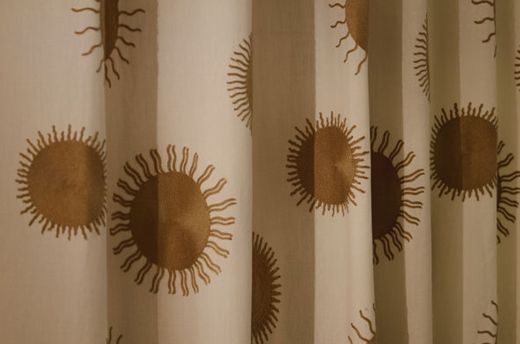
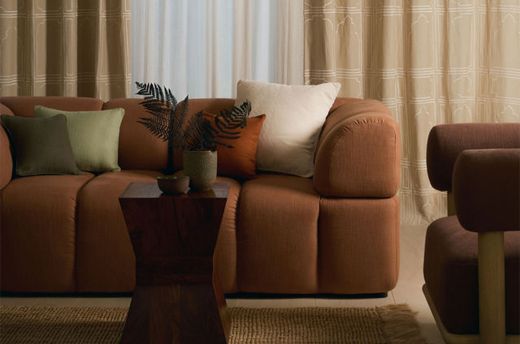
Your strapline, 'Rooted in Tradition, Modern in Design,' captures a blend of heritage and contemporary style. How do you bring that balance to life?
It starts with the techniques. Many of the weaving and crafting methods we work with in India have been passed down through generations: jacquard weaving, intricate embroidery, fabric dyeing methods. These are not shortcuts; they are skills that take years to master and produce results you simply cannot replicate by machine.
But we never want heritage to tip into nostalgia. So we bring those age-old methods to contemporary colourways, cleaner silhouettes, and a modern sensibility around the home. The result, we hope, feels timeless rather than of any particular moment. Traditional at its core, but something that works just as beautifully in a Georgian townhouse as in a new-build apartment.
A strong commitment to sustainability underpins the brand. Can you share more about your approach?
For us, sustainability is not a marketing position, it is a starting point. We are always looking for the best ways to bring nature's purity into the home without compromising the world outside it.
We are proud to be Positive Luxury certified, holding the Butterfly Mark, which is awarded only to brands that can demonstrate a genuine positive impact on people and the planet. The certification covers everything from environmental practices and supply chain ethics to social impact and innovation, and achieving it required us to look rigorously at every part of how we operate. It is not a badge we take lightly.
Our materials and packaging are responsibly sourced to meet high environmental and ethical standards, and we work only with partners who share our commitment to longevity and low impact. Because we believe that truly beautiful interiors should be created in balance with the natural world, not at its expense.
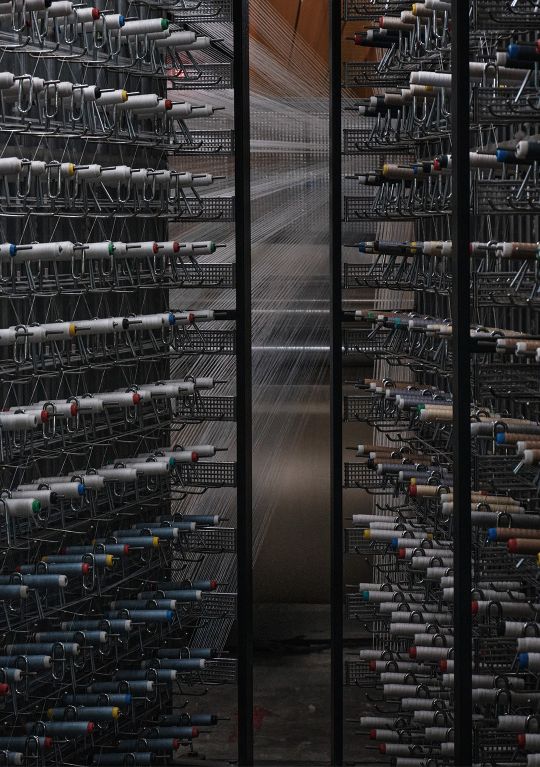
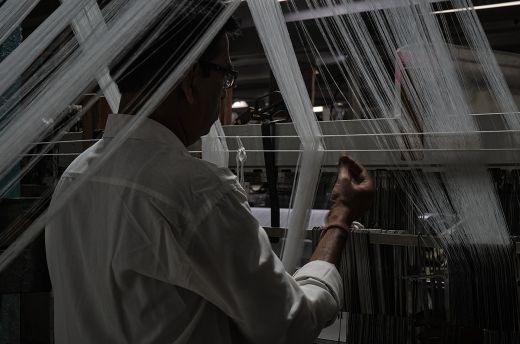
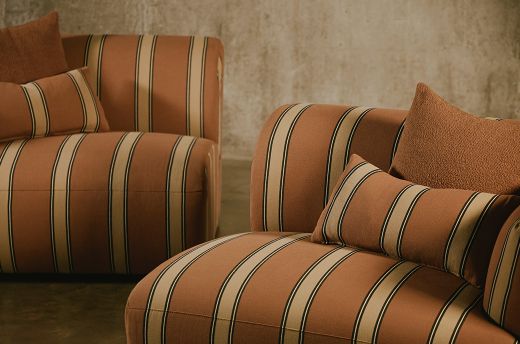
The velvet creel, with over 1,000 spools that make up the pile yarn of the velvet, Dabby fabric & Jaipur Stripe fabric
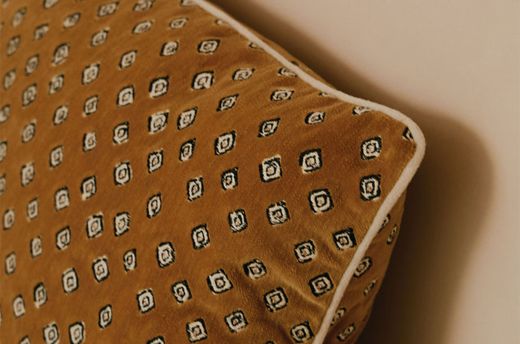
How does Indian culture and craftsmanship shape the designs you produce?
Deeply, and in every direction. India is where our family's story begins, and it remains the heart of how we make things. With over four decades of manufacturing experience rooted in India, we have an intimate understanding of what the country's textile traditions are capable of, and we bring that knowledge into every collection we produce.
It is the visual culture of India that feeds so much of our design language. The architecture, the varied traditions and practices, the layered colour of its markets, the earthy warmth of the landscape at golden hour. These find their way into our palettes and patterns without us having to try too hard. It is simply part of who we are.
What inspires you and your creative team?
India, always. Our most vivid references come from time spent there: the colours of a bazaar at midday, the geometric tiles of an old haveli, the textiles draped across a window to soften the afternoon light. Every trip leaves us with something we carry back into our work.
But just as much, it is the quieter memories. Our grandmother's house, the weight of the fabrics there, the way certain textures and colours were just part of the fabric of daily life growing up. Those early impressions shaped our eye before we even knew we had one.
Childhood has a long reach in this brand. The things we noticed as children, the warmth of a particular room, a pattern that stuck with us for no obvious reason, have a way of resurfacing when we sit down to design. JORO, in many ways, is our attempt to bottle that feeling and share it with other people's homes.
What is your creative process like from conception to having the finished product in front of you?
It always begins with mood and feeling rather than a brief. We gather references: colours, landscapes, textiles we have encountered, things that have stayed with us, and let them sit together until a direction starts to emerge naturally.
From there, we work closely with the weaving team in India. There is a great deal of back and forth: initial samples, adjustments to weight and weave, conversations about colour that can go on for weeks. The finishing detail, the fall of a fabric and the hand-feel of a particular weave, matters just as much as the original concept.
By the time a piece reaches us as a finished product, it will have been through many iterations. We believe that process shows, even if a customer cannot quite articulate why something feels right. It just does.
Your signature earthy tones are a defining part of the brand aesthetic. How would you recommend styling them in the home?
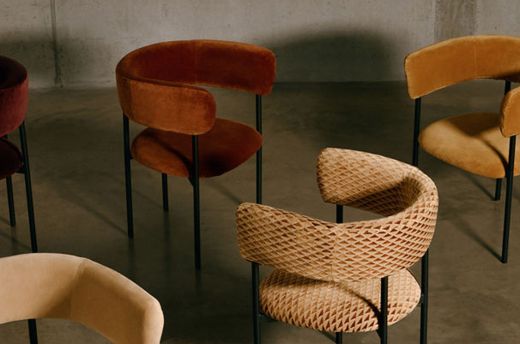
Start with them as your foundation rather than your accent. Earthy tones like warm terracotta, dusty pink, soft sage and deep teal have a grounding quality that makes a room feel settled and lived-in rather than decorated.
Our fabrics do a lot of the work here. The weight and texture of a fabric changes how a colour reads in a space, and we spend a great deal of time getting that relationship right. A deeper tone in a rich, tactile weave will anchor a room beautifully, while the same colour in a lighter fabric will give it air and softness. It is worth thinking about the two together rather than colour alone.
Do not be afraid of depth, either. People often worry about going too dark, but a room built around considered, earthy tones tends to feel far more luxurious and inviting than one that plays it safe.
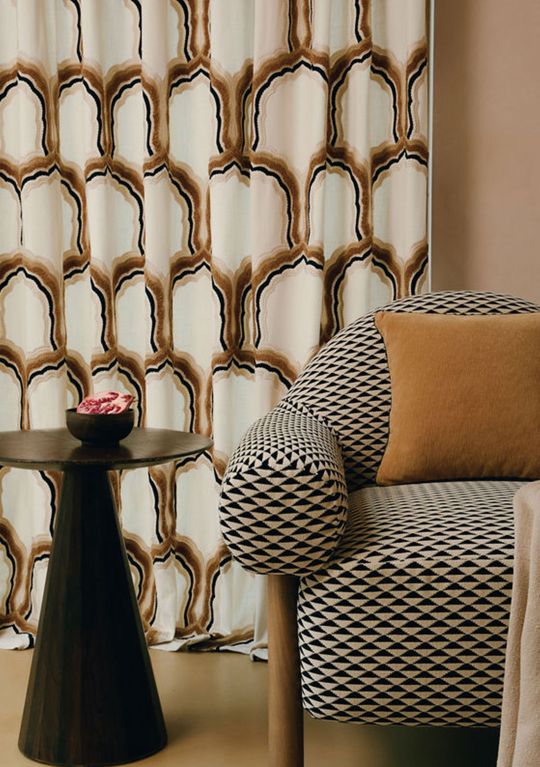
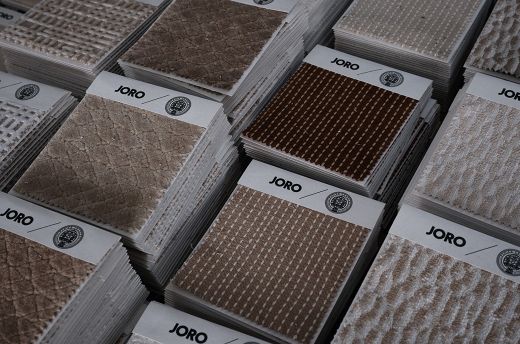
Do you have any favourite ways to mix textures, prints or materials within a space?
We love the pairing of velvet and linen. The contrast between soft opacity and relaxed, natural weave is one of those combinations that simply works.
With patterns, we would always say let one lead and let the others support. And never underestimate the power of scale. Mixing a larger, bolder print with a finer texture or tighter weave gives a space visual rhythm. It makes a room feel alive rather than flat.
What's next for JORO?
We are in a really exciting moment. Our fabrics are something we are investing a great deal of energy into. The response has been wonderful, and we are looking forward to expanding what we offer there
We are also continuing to develop our collections with new colourways and weave structures that push what we have done before while staying true to what JORO is. There is no shortage of ideas; the challenge, as ever, is being selective. Every piece has to earn its place.
More than anything, we want to keep growing the community around the brand: the people who love considered interiors, who care about where things come from and how they are made. That feels like the most important work of all.

Independent Service Rating based on 48 verified reviews. Read all reviews

